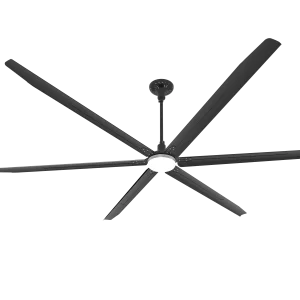
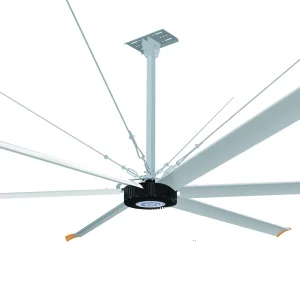
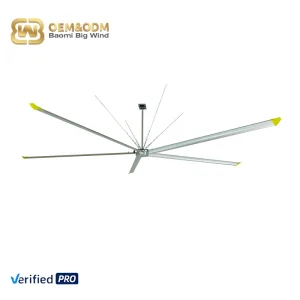
Engineered for high-volume air distribution, minimal energy consumption, and structural longevity in high-humidity industrial environments.
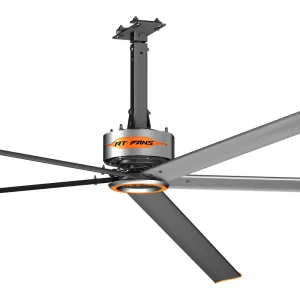
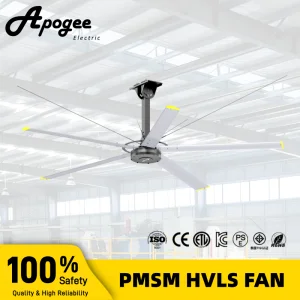
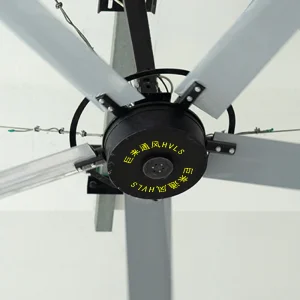
Why modern logistics, manufacturing, and port operations in Northern Vietnam require advanced air circulation technology.
As a coastal port city, Hai Phong experiences extreme relative humidity (frequently exceeding 85%) during seasonal transitions. This environment triggers condensation on concrete floors and metal structural components, leading to corrosion and product degradation. HVLS fans eliminate this boundary layer, preventing condensation through constant, gentle evaporation.
With major hubs like Dinh Vu - Cat Hai Economic Zone, VSIP Hai Phong, and Trang Due Industrial Park, factories host high-density machinery and human activity. Traditional air conditioning is cost-prohibitive for large-span buildings. High Volume Low Speed fans offer an efficient cooling solution, reducing perceived temperatures by 5°C to 8°C.
Lach Huyen Deep Sea Port and surrounding dry ports require high-capacity storage warehouses. High-volume air movement keeps packaging dry and maintains air freshness, crucial for electronics manufacturing services (EMS), heavy industries, and dry food storage.
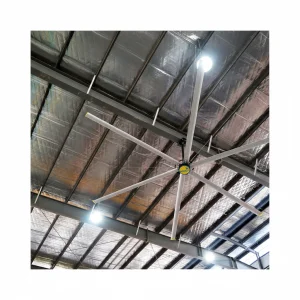
Implementing HVLS Ceiling Fans resolves the thermodynamic bottleneck of high-ceiling buildings. Rather than forcing high-pressure streams of air that quickly dissipate, HVLS technology creates a continuous, column-shaped air mass that flows downward to the floor, spreading out radially to create a natural evaporative cooling effect across thousands of square meters.
Get Free Layout Design & Layout PlanningCombining design elegance with robust ventilation capabilities to meet specific noise, aesthetic, and spatial constraints.
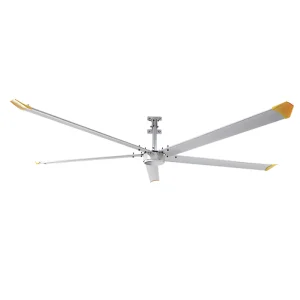
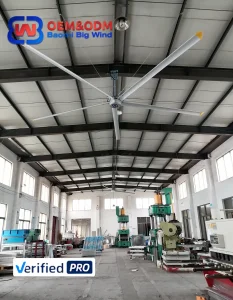
A deep dive into the mechanical and electrical principles that make modern HVLS fans the cornerstone of industrial sustainability.
Traditional high-velocity fans rely on turbulent, high-speed airflow to create localized cooling. However, because air resistance increases exponentially with velocity ($F_d \propto v^2$), these systems consume high amounts of electrical energy while cooling relatively small areas.
In contrast, HVLS fans utilize large-diameter, aerodynamically optimized aluminum blades (or airfoils) running at low rotational speeds. This design generates a continuous, massive column of air that travels downwards. When this column hits the floor, it disperses horizontally in all directions, creating a "floor jet" that sweeps outward. This low-velocity air layer mimics natural wind, accelerating the evaporative cooling process on human skin, which reduces perceived temperature by up to 8°C without causing structural drafts or disturbing dust.
The industrial ventilation industry has shifted away from traditional asynchronous motors paired with gearboxes. The modern standard centers on **Direct Drive Permanent Magnet Synchronous Motors (PMSM)**.
During heating seasons, warm air naturally rises and accumulates near the ceilings of tall industrial buildings, while cool air settles on the floor (thermal stratification). HVLS fans solve this by operating in reverse or at low speeds, gently mixing the air column. This process—thermal destratification—reclaims trapped heat from the ceiling, redistributing it to the working plane and reducing heating system energy consumption by up to 30%. In summer, operating HVLS fans alongside air conditioning units allows facilities to raise their thermostat settings by 3-5°C while maintaining the same level of occupant comfort, lowering overall cooling bills.
How Dongguan Fanpro Light Co., Ltd. delivers high-precision engineering and reliable OEM/ODM services globally.
Dongguan Fanpro Light Co., Ltd. is a specialized ceiling fan manufacturer focusing on the design, development, and production of smart ceiling fans, DC motor ceiling fans, and energy-efficient air circulation solutions for residential, commercial, and hospitality applications. Established in 2012, our facility is located in Dongguan, Guangdong, one of China's primary manufacturing hubs, which provides convenient access to global logistics networks.
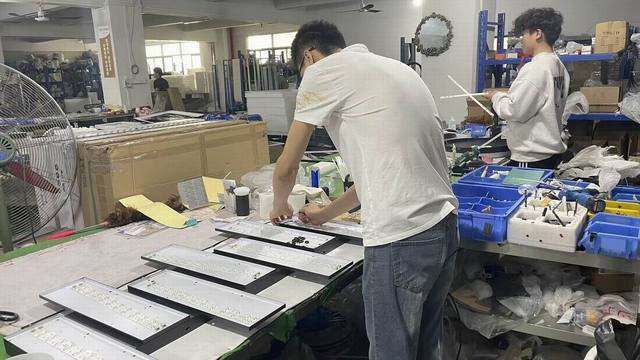
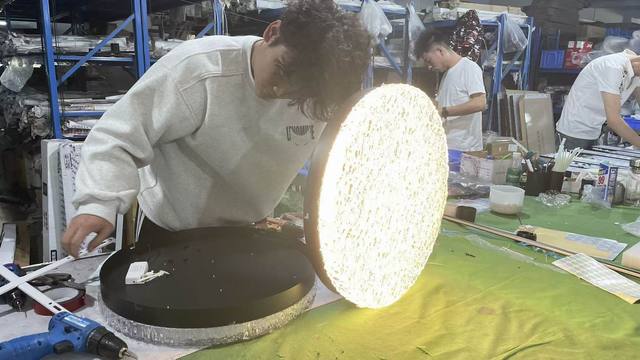
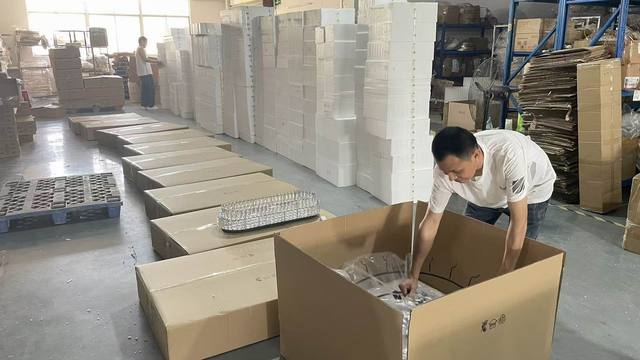
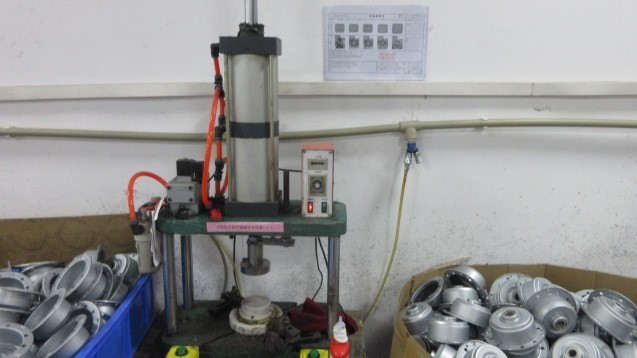
Operating a modern production facility that spans more than 12,000 square meters and employing over 180 skilled staff, Fanpro Light integrates product design, mechanical engineering, precision manufacturing, quality control, and international shipping logistics. Our assembly lines and testing laboratories evaluate structural integrity, dynamic balance, and electrical safety to meet international certification standards.
For our industrial customers in Hai Phong and worldwide, this translates to robust supply chain resilience. Through proximity to Shenzhen port, we coordinate direct, fast shipments to Lach Huyen and Dinh Vu Ports in Vietnam. This minimizes lead times, ensures project timelines are met, and provides reliable access to replacement parts.
Explore our complete range of high-torque, PMSM-driven, and gearless ceiling fans for large spaces.
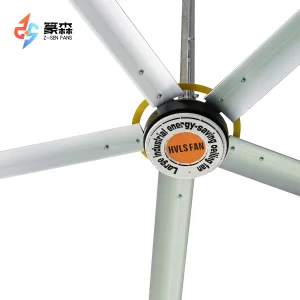
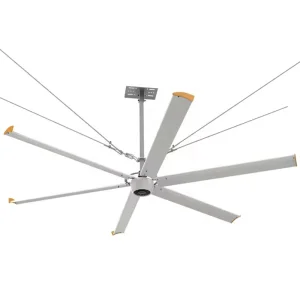
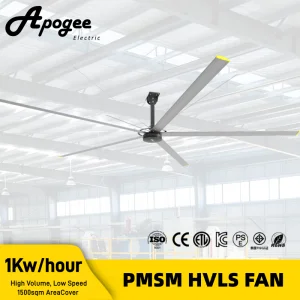
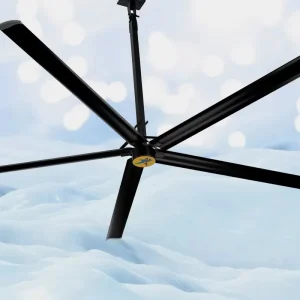
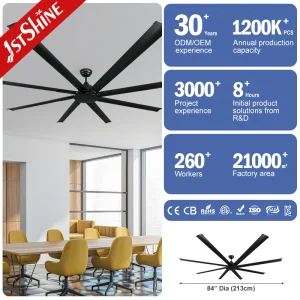
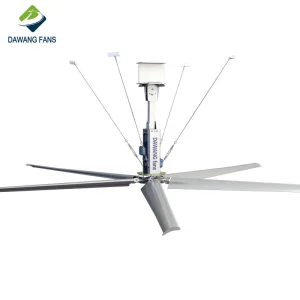
Engineered for high structural reliability, featuring multiple safety protocols to secure overhead operations.
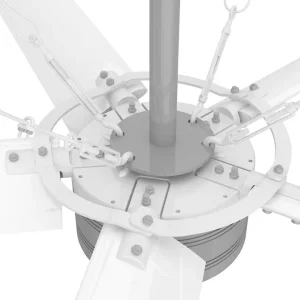
High-tensile steel wire safety cables connect the motor mounting frame to the roof structure, providing secondary protection that prevents the fan assembly from falling in the event of primary joint damage.
The blade wheel assembly features an interlocking anti-fall structure. This design ensures that even under physical impact or mechanical stress, the fan blades remain securely attached to the main hub.
Variable Frequency Drive (VFD) controllers monitor motor load continuously. If structural obstructions are detected or electrical anomalies arise, the controller instantly interrupts power to safeguard the motor.
Technical answers to common questions about selection, installation, and performance in industrial operations.
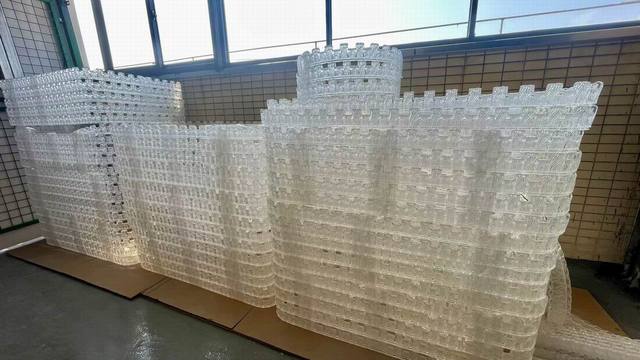
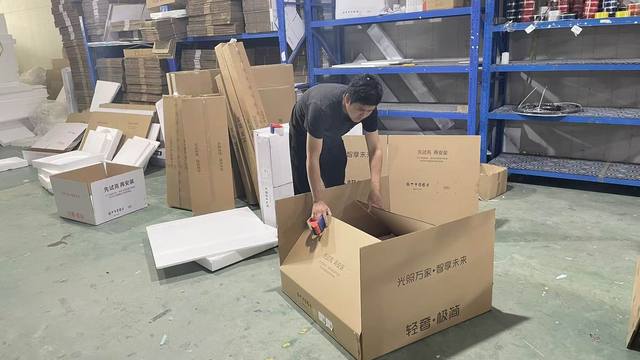
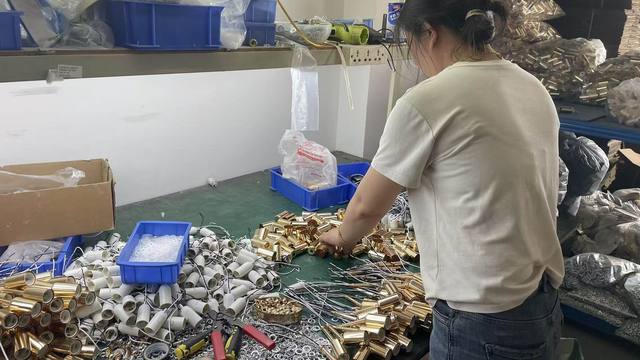
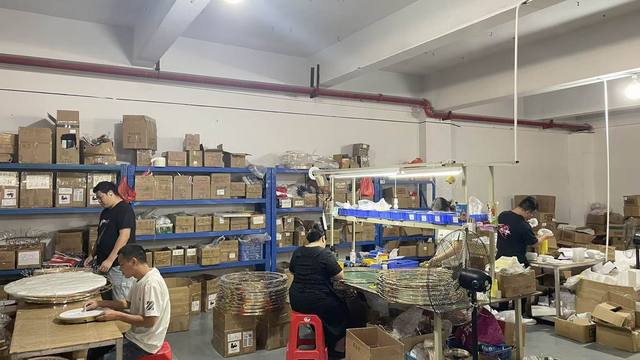
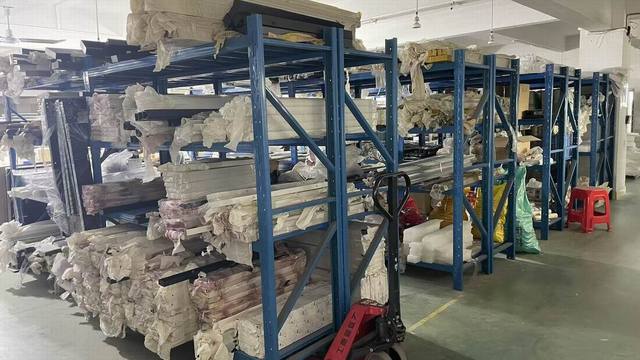
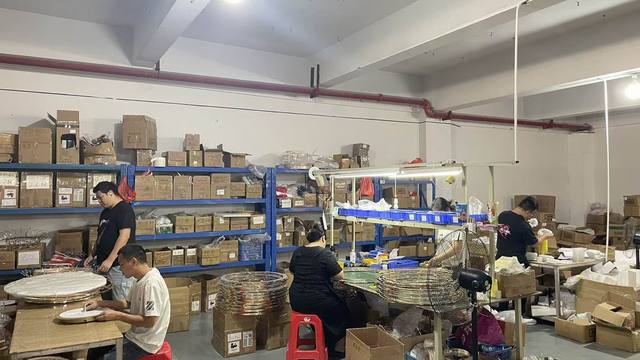
A look inside our 12,000+ sqm manufacturing facility, advanced assembly lines, testing zones, and storage areas.
Connect with our engineering support team to receive custom design layouts, energy savings analyses, and pricing estimates for your facility in Hai Phong or other international regions.
Send Inquiry Now Fanpro Light