How to Use Ceiling Fans in Winter to Save Energy?

Time:2026-10-05 Author:Amelia
0%

As winter settles in, many homeowners ask, “can ceiling fans work in winter?” The answer is yes, but only when used correctly. A ceiling fan cannot create heat. It can move warm air trapped near the ceiling back toward living areas.

John Barba, an HVAC educator and indoor-comfort specialist, explains, “A ceiling fan does not heat a room; it redistributes the heat already there.” This distinction matters. Set the fan to rotate clockwise at its lowest speed. You should feel a gentle upward pull, not a cold breeze across your skin. In a room with a 10-foot ceiling, this setting can help return warm air toward the occupied zone.

Try it near a thermostat or exterior wall. Notice whether the furnace runs less often. Keep bedroom doors slightly open when appropriate, so warmed air can circulate. A quiet fan above a sofa may improve comfort without raising the thermostat.

Small changes matter.

However, results vary. Poor insulation, sealed vents, or an oversized room can limit savings. A fan left on high may make people feel colder, causing them to increase heating demand. Turn it off when nobody occupies the room. Check the direction switch before changing settings, and never adjust it while the blades are moving.

This guide focuses on practical winter use, measured comfort, and realistic energy savings. Ceiling fans are helpers, not heaters. Your home’s insulation and heating system still carry most of the responsibility.
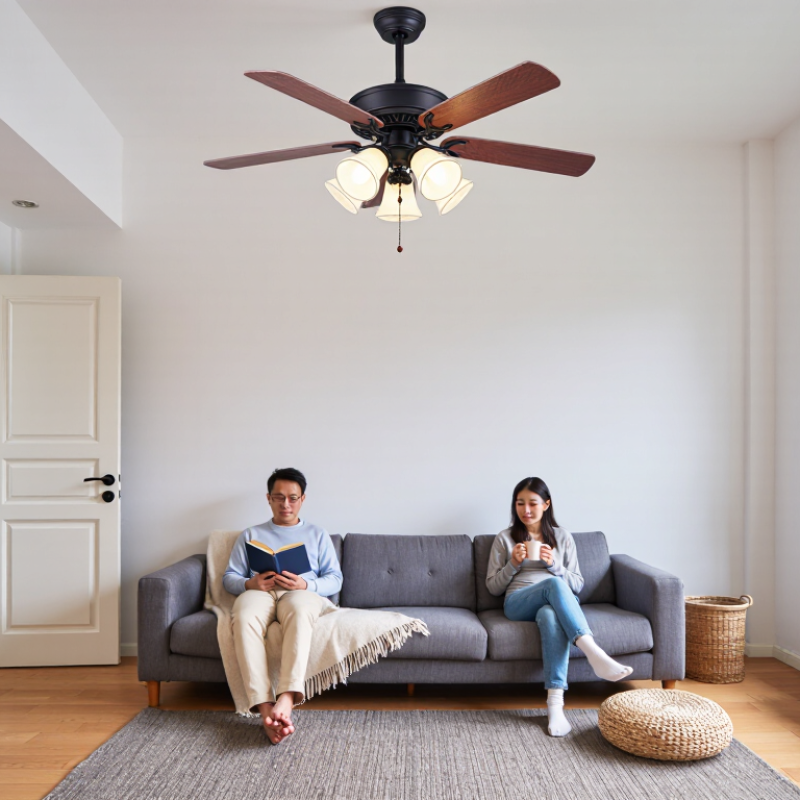
How to Use Ceiling Fans in Winter to Save Energy?

How Ceiling Fans Help Save Energy in Winter

Ceiling fans can help save energy in winter by moving warm air downward. Heated air naturally rises and collects near the ceiling. A gentle reverse rotation can return some of that warmth to the living area. This may let you lower the thermostat slightly without feeling colder. The exact direction depends on the fan’s design, so check the manual before changing it. Keep the speed low; strong airflow can create an unwanted chill. Small adjustment.

In a bedroom, I test the setting with my hand beneath the fan. I should feel mild circulation, not a direct breeze. I also close doors to unused rooms and keep windows fully shut. A ceiling fan cannot fix drafts, poor insulation, or an open window. It only redistributes existing heat. That distinction matters when judging energy savings. My first winter setting was too fast, and the room felt colder. Slowing it down worked better, although comfort differed between rooms.

Use the fan only while people occupy the room, unless the manual recommends otherwise. Turning it off when leaving avoids unnecessary electricity use. Dust the blades and check for wobbling, since a clean, balanced fan runs more quietly. Track your thermostat setting and electricity use for several days. Weather changes can distort the comparison. Results will not be identical in every home, and a modest saving is more realistic than a dramatic one.

Choosing the Correct Winter Fan Direction

How to Use Ceiling Fans in Winter to Save Energy

Choosing the Correct Winter Fan Direction

In winter, set your ceiling fan to rotate clockwise when viewed from below. This direction pushes warm air down from the ceiling. Use the lowest comfortable speed to avoid creating a chilly draft. Warm air naturally rises, especially in rooms with high ceilings. A gentle downward flow can help distribute that trapped heat more evenly. Keep the fan at least 8 to 10 feet above the floor for safer, smoother airflow. If the room still feels cold, check the direction again. Some fan controls reverse the setting differently, so the manual remains the most reliable guide.

Tips: Stand beneath the fan and feel the airflow. You should sense a mild downward movement, not a strong breeze. Run the fan for several minutes, then adjust your thermostat slightly. The fan does not warm the room itself. It only moves existing heat, so leaving it on in an empty room may waste electricity.

I used to think a faster setting would save more energy, but it often made the room feel colder. That meant raising the thermostat again. A quieter, slower setting usually works better for occupied rooms. Close unused room doors and check for drafts near windows. Results can vary with ceiling height, insulation, and fan design. Testing one small change at a time is less perfect, but it gives clearer evidence.

Setting the Right Fan Speed for Warm-Air Circulation

How to Use Ceiling Fans in Winter to Save Energy?

Space heating can consume about 42% of household energy, according to the U.S. Energy Information Administration’s 2020 Residential Energy Consumption Survey. A ceiling fan cannot create heat, but it can redistribute warm air trapped near the ceiling. Set the fan to rotate clockwise when viewed from below. Use the lowest comfortable speed. This gentle downdraft helps move warm air toward occupied areas without creating a chilly breeze.

Stand beneath the fan and check the airflow on your face. You should feel slight circulation, not a strong draft. The U.S. Department of Energy recommends low-speed winter operation for this purpose. In a room with a 2.7-meter ceiling, begin with the lowest setting and wait 10 minutes. Then compare the air near the floor and ceiling with a thermometer. A difference of several degrees suggests useful stratification, but results vary with insulation and room layout. Mine improves most when doors remain open.

Avoid running the fan in empty rooms. That wastes electricity. Use a timer or wall control for bedrooms and living areas. Also, reduce the thermostat only after the room feels evenly warm. My first setting was too fast, and the moving air felt colder. That was a useful correction. DOE guidance also notes that fans work best with sensible thermostat management, rather than replacing heating. Keep furniture and tall cabinets away from the airflow path. Safety matters more than a small energy gain.

How to Use Ceiling Fans in Winter to Save Energy?

Set the fan to reverse rotation at a low speed to gently circulate warm air that collects near the ceiling.

Estimated electricity use is calculated for a 30-watt ceiling fan: kWh = 0.03 × operating hours. Running a fan consumes far less electricity than typical space heating, but the actual benefit depends on room insulation, ceiling height, thermostat settings, and fan power. Use the lowest reverse speed that provides gentle air circulation without creating a draft.

Using Ceiling Fans with Heating Systems Safely

How to Use Ceiling Fans in Winter to Save Energy

A ceiling fan can help distribute warm air more evenly during winter. Warm air naturally rises toward the ceiling, leaving the floor cooler. Set the fan to reverse mode and use the lowest speed. From below, the blades usually turn clockwise, but confirm the direction in the fan’s manual. Design differences matter.

I learned this after feeling a cold draft beneath a fast-moving fan. The setting was wrong for my room. A gentle airflow should move warm air downward without creating a noticeable breeze. Check the room after thirty minutes. If people feel colder, lower the speed or switch the fan off. Energy savings are not automatic. They depend on insulation, ceiling height, heating efficiency, and outdoor temperature.

Safety matters when combining a ceiling fan with a heating system. Keep furniture, curtains, and decorations away from the blades. Never operate a loose, noisy, or wobbling fan. Turn off power before cleaning or checking it. Do not cover supply vents or return grilles, because blocked airflow can strain the heating system. If the fan is near a gas appliance, maintain proper ventilation and install working carbon monoxide detectors. A ceiling fan does not replace professional heating maintenance. I once assumed a quieter fan was always safer, but unusual sounds can indicate worn parts. Stop using it and request a qualified inspection.

Common Winter Ceiling Fan Mistakes to Avoid

How to Use Ceiling Fans in Winter to Save Energy?

Winter ceiling fans help distribute warm air, but common mistakes can waste electricity. Set the blades to rotate clockwise when viewed from below. This usually pulls cool air upward and pushes warm air gently toward occupied areas. Use the lowest comfortable speed. High speed can create drafts, making the room feel colder.

Stand beneath the fan for a minute. Your skin should feel little direct airflow.

Never leave a ceiling fan running in an empty room. Fans cool people, not rooms. The U.S. Department of Energy explains that fans support thermostat adjustments, but they do not replace heating systems. A fan running continuously may erase its expected savings.

The U.S. Energy Information Administration reported that space heating represented about 42% of household energy use in its residential energy analysis. Small heating improvements therefore deserve attention, but fan settings still matter.

Keep blades clean and check for wobbling before winter use. Dust can reduce airflow, while vibration may signal loose parts. Do not assume every fan’s reverse setting works identically. Check the control and observe the airflow.

I once used a high setting near a drafty window, and the room felt worse. That mistake was simple, but revealing.

Close leaks, keep vents clear, and use a timer when possible. The better goal is gentle air mixing, not visible movement.

FAQS

Which direction should a ceiling fan turn during winter?

Use reverse mode. The blades usually turn clockwise when viewed from below. Check the manual because designs vary.

Why does reverse mode help in winter?

Warm air rises toward the ceiling. Gentle downward circulation can spread that warmth near the floor.

What fan speed works best with heating?

Use the lowest comfortable speed. You should feel little direct airflow beneath the fan. High speed may create a cold draft.

How can I tell whether the setting works?

Stand beneath the fan for one minute. Check the room again after thirty minutes. If people feel colder, reduce the speed or switch it off.

Should a ceiling fan run in an empty room?

Usually, no. Fans cool people rather than rooms. Turn the fan off when nobody occupies the space.

What safety checks should I make before winter use?

Check for wobbling, unusual noise, and loose parts. Keep curtains, furniture, and decorations away from the blades. Turn off power before cleaning.

Can a ceiling fan affect the heating system?

Keep supply vents and return grilles clear. Blocked airflow can strain the heating system. A fan does not replace professional heating maintenance.

What should I do if the fan is near a gas appliance?

Maintain proper ventilation and use working carbon monoxide detectors. Stop using the fan if unusual sounds appear. Request a qualified inspection.

Will a ceiling fan always reduce energy use?

No. Savings depend on insulation, ceiling height, heating efficiency, and outdoor temperature. The result is not automatic.

What winter mistake should I avoid?

Avoid high speed near a drafty window. I once tried it, and the room felt colder. The simpler setting was better.

Conclusion

Ceiling fans can help reduce winter energy use by redistributing warm air that naturally rises toward the ceiling. By gently pushing this trapped heat back into the living area, they can make a room feel warmer without requiring the heating system to work as hard. If you are wondering, “can ceiling fans work in winter,” the answer is yes, provided they are used correctly. Set the fan to rotate clockwise at a low speed so it creates a gentle updraft and circulates warm air without producing an uncomfortable breeze.

For safe and effective use, operate the fan together with your heating system, but avoid running it at a high speed or leaving it on in an empty room. Make sure the fan is properly installed, keep furniture and curtains clear of its blades, and check that the direction setting is correct before use. Common mistakes include using summer mode, choosing excessive speed, and expecting the fan to generate heat. With thoughtful settings and sensible operation, a ceiling fan can improve comfort and support more efficient winter heating.

Amelia

Amelia

Amelia is a seasoned marketing professional with a wealth of expertise in our company’s core offerings. With an unwavering passion for driving growth and innovation, she plays a pivotal role in shaping our marketing strategies and enhancing brand visibility. A key aspect of her responsibilities......