When buyers ask, “how does a ceiling fan work,” they usually want more than a simple spinning-blade explanation. A ceiling fan uses an electric motor to rotate angled blades, creating downward airflow and improving room circulation. It does not normally lower the room’s actual temperature. Instead, moving air helps sweat evaporate from skin, making people feel cooler.
The motor, capacitor, blade pitch, and housing all affect performance. A stronger motor may move more air, but it can also consume more electricity. Blade size matters too. Large blades often suit spacious rooms, while compact designs work better in bedrooms or smaller offices. In real installations, mounting height, ceiling angle, and furniture placement can change airflow noticeably. A fan may look powerful in a showroom, yet feel weak after installation. That gap deserves attention.
Global buyers should also examine voltage, frequency, control systems, noise levels, and safety certifications. A product designed for one electrical market may require different specifications elsewhere. Check the motor label carefully. Remote controls, wall switches, smart systems, and reverse rotation may not share the same compatibility. Energy ratings can help compare long-term operating costs, but testing methods may vary between regions. Ask for clear technical documents and verified performance data.
Small details matter.
This guide explains the operating process, key components, efficiency factors, and purchasing concerns behind modern ceiling fans. It also recognizes an important limitation: airflow claims cannot predict comfort in every room. Temperature, humidity, ceiling height, and personal preference remain influential. Careful comparison gives buyers a more reliable decision.
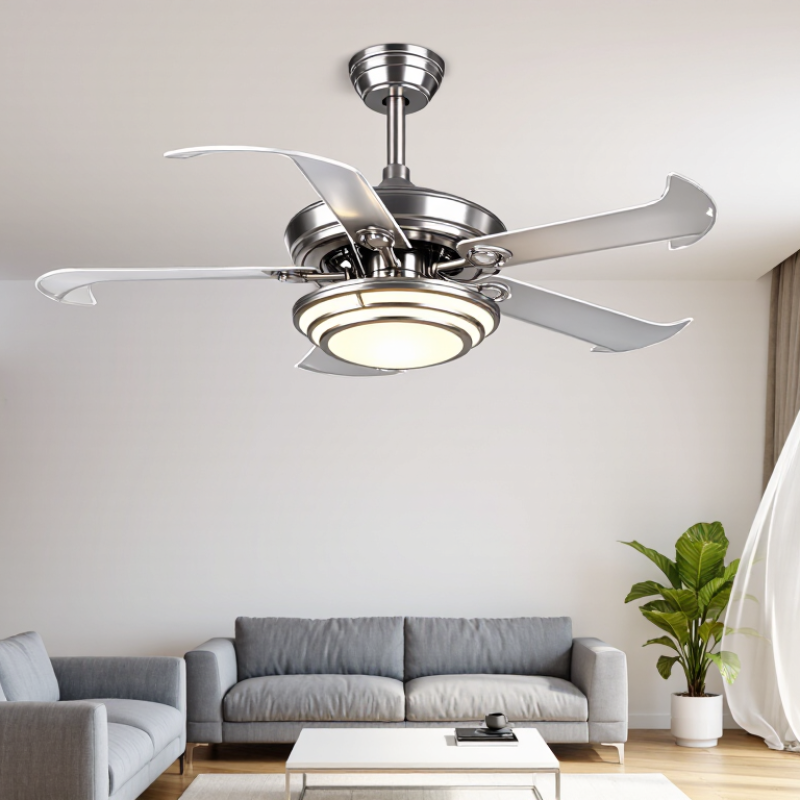
A ceiling fan moves air through blade angle, rotation speed, and motor torque. The blades push air downward, creating a wind-chill effect on skin. They do not significantly lower room temperature.
The U.S. Department of Energy explains that fans cool people, not empty rooms. Its Energy Saver guidance also says occupants may raise the thermostat by about 4°F while maintaining comfort. That detail matters in hotels, warehouses, and homes.
The motor converts electrical energy into rotational force. A capacitor-start motor is common, while electronically controlled motors can adjust speed more precisely. Blade diameter affects coverage, but larger blades are not always better. Poor balance can cause vibration, noise, and early bearing wear.
I have seen specifications focus on RPM while ignoring airflow volume. That is a mistake. Buyers should compare airflow, efficiency, noise, and operating temperature together.
Power frequency also affects performance. A 50 Hz supply may produce different motor speed than a 60 Hz supply, especially with induction motors. Voltage and frequency must match the destination grid.
The International Energy Agency’s Future of Cooling report projects global space-cooling energy demand could more than triple by 2050 without stronger efficiency measures. Therefore, exporters should request verified test data, safety documentation, and local certification. Check the details twice. They are easy to overlook.
A ceiling fan turns electrical input into controlled rotation through a motor and capacitor network.
In a 120 V system, current enters the motor’s designed winding circuit. A 230 V model needs different winding insulation and connection arrangements. Voltage is not a simple plug-in detail.
Frequency matters too.
A 50 Hz supply can change speed and motor heating compared with 60 Hz operation. Global buyers should read the motor nameplate, not rely on appearance.
In a common single-phase AC fan, the capacitor shifts current in an auxiliary winding. This phase difference creates a rotating magnetic field inside the stator. The rotor follows that field and turns the blades through the shaft.
The capacitor also influences starting torque, running efficiency, and direction.
Too little capacitance may cause weak starting or humming.
Too much can raise current and temperature.
Small component. Serious effect.
During inspection, check the capacitor’s capacitance, voltage rating, wiring, and physical swelling.
A replacement should match the specified value and approved tolerance. Never treat a 120/230 V label as universal compatibility.
Some modern fans use electronic controllers and brushless motors, so they do not use the same capacitor arrangement. The neat diagram can mislead.
I would also question unloaded speed claims, because blade pitch, supply frequency, and bearing condition affect performance.
A qualified technician should verify connections before energizing the fan.
Hands-on testing remains useful, but careless testing can hide a fault.
A ceiling fan’s airflow is best judged through CFM, RPM, and blade span together. CFM, or cubic feet per minute, measures the air volume moved. RPM shows how quickly the blades rotate. Blade span describes the diameter of the swept circle. These figures answer different questions.
The U.S. Department of Energy’s ceiling-fan test procedure evaluates airflow and electrical input under controlled conditions. Its method reflects the AMCA 230 standard, which helps buyers compare tested performance rather than catalogue claims. Higher RPM can increase CFM, but it may also raise noise and power use. A wider blade span usually moves more air at lower speed because swept area expands with the square of radius. Doubling span does not guarantee double CFM. Motor design matters.
ENERGY STAR data reports that certified ceiling fans can use up to 60% less energy than conventional models. That figure concerns efficiency, not automatically stronger airflow. A buyer should check CFM per watt, high-speed CFM, and the tested blade span. For example, a 52-inch fan with 5,000 CFM may suit a larger room, while a 44-inch model may feel sharper in a compact space. Room height changes comfort, too. A fan mounted too close to the ceiling can lose useful circulation. I have found that shoppers often focus on RPM first. That is a weak shortcut. CFM is the practical result, but testing conditions still deserve scrutiny.
Ceiling fans move air by rotating angled blades, but the motor determines how efficiently that movement happens. A BLDC motor uses permanent magnets and electronic commutation. It avoids the slip losses found in traditional induction motors. This design usually delivers strong airflow at lower electrical input. The U.S. ENERGY STAR program reports that certified ceiling fans can use about 60% less energy than conventional models. That figure depends on tested airflow, speed, and control settings.
An AC motor runs directly from the building’s alternating-current supply. It is mechanically simple and often easier to service. However, its capacitor and induction losses create more heat during operation. Speed control can also be less precise, especially at very low settings. BLDC fans normally include electronic controllers, remote controls, timers, and sometimes occupancy sensors. Their standby consumption deserves attention. It may be small, but thousands of units in hotels or apartments can make it visible on an annual energy review.
The International Energy Agency has estimated that electric motors consume roughly 46% of global electricity. Ceiling fans are only a small part of that total. Still, repeated daily use makes efficiency practical, not theoretical. Buyers should compare airflow per watt, noise, control compatibility, voltage, and local frequency. A high-efficiency motor cannot compensate for poorly sized blades or blocked airflow. That part is often overlooked. The comparison is not perfect, either; independent test conditions may differ from real rooms, where humidity, ceiling height, and user habits change energy results.
A ceiling fan uses an electric motor to rotate angled blades. The blades push air downward, creating a cooling breeze without lowering room temperature. For global buyers, the motor must match the destination market’s voltage and frequency. Common examples include 110–120 V at 60 Hz and 220–240 V at 50 Hz. Variations still exist.
IEC 60335-2-80 addresses safety requirements for household and similar electric fans. It covers construction, insulation, wiring, markings, abnormal operation, and protection against electric shock. Buyers should request test reports for the correct product configuration, not a generic document. Check the applicable edition and national deviations. Compliance with IEC requirements may not replace local certification or registration. A practical review should also confirm rated current, capacitor specifications, earthing or double insulation, and secure blade attachment. One overlooked frequency detail can cause poor starting, overheating, or unusual noise.
Tips: Ask for a voltage-frequency table, plug details, installation instructions, and clear safety markings. Confirm whether the supplied controller works with the motor. Do not assume a universal model fits every market. A checklist helps, but it is not flawless; sample testing and independent verification remain worthwhile. Even small labeling errors deserve attention.
Ceiling fans convert electrical energy into rotational motion through a motor, which drives the blades to move air. IEC 60335-2-80 specifies safety requirements for household and similar electric fans, but it does not define regional mains voltage. Global buyers should match the fan’s rated voltage and frequency with the destination market: common systems include 100 V, 120 V, 127 V, and 230 V, operating at either 50 Hz or 60 Hz.
Its blades push air downward across skin. This increases evaporation and creates a wind-chill effect. The room temperature usually stays nearly unchanged.
No. It mainly cools people, not furniture or empty air. Turn it off when nobody occupies the room. That saves electricity.
CFM measures moved air volume. RPM shows blade rotation speed. Blade span measures the swept-circle diameter. Compare all three figures together.
Not necessarily. Higher RPM can increase airflow, noise, and power use. A slower fan with wider blades may move air efficiently. That shortcut fails.
Wider blades cover more area and may move air at lower speed. However, blade shape, pitch, and motor strength also matter. Bigger is not automatically better.
Poor blade balance can create shaking, clicking, or humming sounds. Continued vibration may wear bearings earlier. Check blade alignment and mounting hardware.
Motor speed can change when supply frequency changes. Voltage and frequency must match the destination power system. Otherwise, performance, heat, or reliability may suffer.
Request verified airflow, power, noise, and operating-temperature data. Confirm local safety documents and electrical certification. Check twice. Small details are easy to miss.
A larger room may need wider blades and higher tested CFM. A compact room may suit a smaller fan with focused airflow. Mounting height also matters; ceilings can limit circulation.
No. Efficiency describes airflow produced per unit of electricity. Check CFM per watt, high-speed CFM, and tested blade span. The numbers still need context.
Understanding how does a ceiling fan work begins with its blades, motor, and power supply. When electricity enters the motor, it creates rotational force that turns the blades and moves air downward or upward, depending on the selected direction. Capacitors in many AC motor systems help start and regulate rotation, while the input voltage may be designed for common 120 V or 230 V electrical systems operating at 50 or 60 Hz. Airflow performance is typically assessed through CFM, RPM, and blade span: a larger span and suitable speed can move more air, but performance also depends on blade design and motor efficiency.
For global buyers, BLDC and AC motors offer different advantages. BLDC models generally provide efficient operation, quieter control, and flexible speed adjustment, while AC motors remain widely used and straightforward to operate. Buyers should verify voltage and frequency compatibility, control-system requirements, installation conditions, and applicable safety standards such as IEC 60335-2-80 before purchasing. These checks help ensure reliable performance, safe operation, and suitability for the intended market.

Fanpro Light