Choosing an HVLS ceiling fan for a global facility requires more than comparing diameter and price. Buyers must understand airflow, motor efficiency, ceiling height, climate, controls, maintenance, and local electrical requirements. A fan that performs well in a warehouse may feel ineffective in a humid gym or an open livestock building.
So, what is an hvls ceiling fan? It is a large industrial fan designed to move high volumes of air at low rotational speeds. The airflow usually travels downward and spreads across the floor, creating a gentle circulation pattern. Walter Boyd, widely recognized as an HVLS fan pioneer, described the core principle as “large volumes of air at low speeds.” The phrase is simple. The selection process is not.
This guide will help global buyers examine fan diameter, motor type, air coverage, noise levels, safety features, installation conditions, and after-sales support. It will also consider certifications, voltage compatibility, spare parts, and documentation for international projects. A 24-foot fan may look powerful, but poor mounting height can reduce its real performance. A cheaper model may also create higher maintenance costs later.
There is no perfect buying formula. Building layouts differ. Energy prices change. Some product claims deserve closer inspection. Buyers should request test data, airflow charts, warranty terms, and references from similar facilities. Experience matters here, but careful verification matters more. The right HVLS ceiling fan should deliver measurable comfort, dependable operation, and practical value across its expected service life.
Understanding HVLS Ceiling Fan Types and Operating Principles
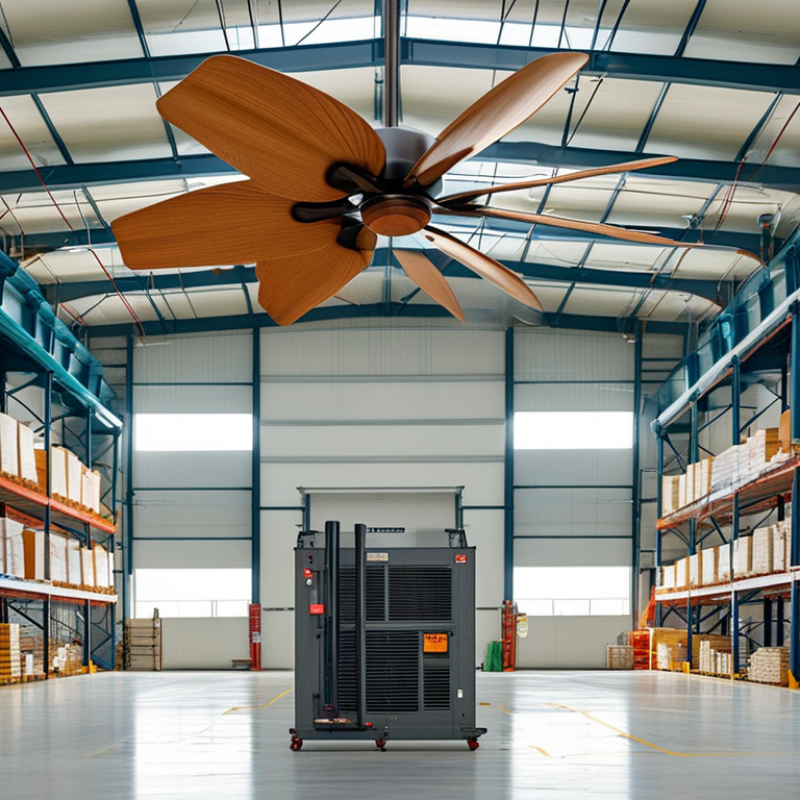
Global buyers should start with operating principles, not diameter. HVLS means high volume, low speed. A large airfoil moves a broad, gentle air column downward. The stream spreads across the floor, then returns upward along walls. This circulation mixes warm ceiling air with cooler occupied-zone air. It does not produce refrigeration. Instead, moving air improves perceived comfort and reduces temperature layering. The IEA’s Future of Cooling report projects global space-cooling electricity demand could rise from 2,020 TWh in 2016 to 6,200 TWh by 2050. Efficient air movement matters.
Two common HVLS types are direct-drive and gear-driven fans. Direct-drive designs usually have fewer moving parts and can offer quieter operation. Gear-driven models may suit demanding industrial environments, but maintenance access becomes important. Some systems target comfort cooling. Others focus on destratification in tall warehouses. The U.S. Department of Energy notes that ceiling fans can support thermostat adjustments of about 4°F while maintaining comfort. AMCA 230-23 provides a recognized method for comparing fan airflow and performance. Buyers should examine airflow, power input, noise, control range, and test conditions together.
A larger fan is not automatically better. Ceiling height, racks, lighting, sprinklers, humidity, and worker locations can change the result. Check the local voltage and applicable safety requirements before ordering. Variable-speed controls help match airflow to seasonal demand. I still see projects selected by diameter alone. That shortcut feels efficient, but it often is not. A site measurement and airflow simulation are worth the extra effort.
Assessing Airflow Needs for Different Global Building Environments
How to Choose an HVLS Ceiling Fan for Global Buyers?
Airflow needs change sharply between buildings. A 12-meter logistics warehouse needs vertical air mixing, not simply stronger wind. Warm air often collects beneath the roof, while workers remain at floor level. Measure roof height, floor area, heat sources, occupancy, and stored obstacles before selecting fan diameter and quantity.
Climate changes the calculation. In a humid tropical factory, moving air across skin can improve comfort, but excessive speed may disturb dust or lightweight materials. In a dry warehouse, destratification may matter more than direct cooling. ASHRAE Standard 55 links acceptable air speed with temperature, humidity, clothing, and activity. There is no universal airflow setting. That shortcut fails.
The IEA’s The Future of Cooling report projects global cooling energy demand could more than triple by 2050. UNEP’s 2023 Global Status Report states that buildings consume about 30% of global final energy and produce roughly 26% of energy-related emissions. These figures strengthen the case for efficient air movement, but fan selection still requires field evidence. Record temperatures at ankle, head, and roof levels. Check airflow near racks and doorways. Test noise during occupied hours. A neat spreadsheet can mislead. Real buildings are rarely neat. Consult a qualified HVAC professional, then compare measured results with the design target and local safety requirements.
Comparing Fan Size, Motor Performance, and Energy Efficiency
Choosing an HVLS ceiling fan for an international facility starts with airflow, not appearance. Measure floor area, ceiling height, obstructions, and heat from machinery. Measure carefully. For a warehouse with 12-meter ceilings, a large-diameter fan may move air efficiently at low speed. A smaller unit can create stronger local drafts but leave distant aisles uncomfortable. Fan spacing also matters near racks, lights, sprinklers, and loading doors.
Motor performance should be judged under real operating conditions. Ask for rated power, torque, speed range, control response, and continuous-duty data. An efficient motor is useful, but stable low-speed operation matters just as much. In dusty or humid buildings, verify protection ratings and maintenance access against local requirements. Noise matters too. One overlooked issue is control compatibility. Voltage and frequency vary across markets, so confirm electrical specifications before ordering.
Compare energy use in kilowatt-hours, not only the motor’s nameplate rating. Look for airflow output per watt, seasonal operating data, and transparent test methods. Automation can reduce waste by adjusting speed when occupancy or temperature changes. Yet sensors need sensible placement; a sensor near a loading door may trigger unnecessary speed changes. Field assessments often show calculations looking excellent on paper, then failing after doors, racks, and lighting change airflow. That deserves scrutiny. Request performance curves, installation drawings, warranty terms, and local service arrangements before purchase.
How to Choose an HVLS Ceiling Fan for Global Buyers? - Comparing Fan Size, Motor Performance, and Energy Efficiency
| Fan Diameter |
Approx. Metric Size |
Recommended Coverage |
Typical Airflow |
Typical Motor Input |
Operating Speed |
Estimated Energy Intensity |
Best-Fit Application |
| 12 ft |
3.7 m |
150–250 m²
1,615–2,690 ft² |
25,000–35,000 CFM
42,500–59,500 m³/h |
0.35–0.75 kW |
70–120 rpm |
Approx. 1.4–5.0 W/m² |
Retail areas, small workshops, studios, and compact warehouses |
| 16 ft |
4.9 m |
250–400 m²
2,690–4,305 ft² |
35,000–50,000 CFM
59,500–85,000 m³/h |
0.50–1.00 kW |
60–105 rpm |
Approx. 1.3–4.0 W/m² |
Medium warehouses, gyms, logistics areas, and production rooms |
| 20 ft |
6.1 m |
400–650 m²
4,305–6,995 ft² |
45,000–65,000 CFM
76,500–110,500 m³/h |
0.75–1.50 kW |
50–95 rpm |
Approx. 1.2–3.8 W/m² |
Large warehouses, factories, distribution centers, and agricultural buildings |
| 24 ft |
7.3 m |
600–900 m²
6,460–9,690 ft² |
55,000–80,000 CFM
93,500–136,000 m³/h |
1.00–2.00 kW |
45–85 rpm |
Approx. 1.1–3.3 W/m² |
High-bay warehouses, aircraft hangars, exhibition halls, and large factories |
| 30 ft |
9.1 m |
900–1,400 m²
9,690–15,070 ft² |
70,000–100,000 CFM
119,000–170,000 m³/h |
1.50–3.00 kW |
35–70 rpm |
Approx. 1.1–3.3 W/m² |
Very large logistics centers, manufacturing plants, terminals, and indoor arenas |
Selection notes: The figures are representative engineering ranges for modern HVLS fans using variable-speed motors, not guaranteed product ratings. Actual airflow, coverage, noise, and power consumption vary with blade design, ceiling height, mounting position, building layout, supply voltage, control settings, and local safety requirements. Energy intensity is calculated from typical motor input divided by the recommended coverage area and is intended for preliminary comparison only.
Checking Safety Standards, Certifications, and Installation Requirements
How to Choose an HVLS Ceiling Fan for Global Buyers?
Safety certification should be checked before airflow performance. The IEA reports that buildings consume about 30% of global final energy. Efficient air movement matters, but a poorly certified fan creates greater risks. Request test evidence for electrical safety, motor protection, blade strength, and control systems. Depending on the market, relevant references may include IEC 60335-2-80, UL 507, or applicable regional electrical standards. CE or UKCA marking alone is not a complete safety assessment. Verify the declaration, testing laboratory, model number, and certification scope.
Installation conditions can change the safety result. Confirm the roof structure can carry the fan, mounting bracket, vibration, and dynamic loads. A qualified engineer should inspect steel beams, concrete anchors, and corrosion exposure. NFPA 13 requirements may affect fan diameter, sprinkler clearance, and automatic shutdown functions. Local editions must be checked. Do not assume one country’s approval transfers worldwide. It often does not.
Measure the lowest blade position carefully. Keep people, lights, cranes, storage racks, and doors outside the manufacturer’s clearance zones. Use lockable isolators and accessible emergency stops. Check voltage, frequency, earthing, and control compatibility before ordering. Site inspections I have seen often focus on airflow, not anchor quality. That is a costly blind spot. Recheck after installation, because vibration, dust, and seasonal roof movement can expose weaknesses. Safety paperwork should match the exact installed configuration, not a similar model.
How to Choose an HVLS Ceiling Fan for Global Buyers?
Safety Standards, Certifications, and Installation Requirements
Global buyers should verify the requirements that apply to the destination market and the fan’s intended installation. IEC 60335-1 covers general safety for household and similar electrical appliances, IEC 60335-2-80 addresses electric fans, IEC 60529 defines IP protection ratings, and IEC 60204-1 applies to electrical equipment of machinery. Local electrical codes, structural loading limits, emergency access, ceiling height, and safe clearance requirements must also be confirmed before installation.
Evaluating Suppliers, Costs, Maintenance, and After-Sales Support
Choosing an HVLS ceiling fan for a global facility requires more than comparing airflow and purchase prices. Supplier quality matters immediately. Request factory audit records, product drawings, motor data, and references from similar warehouses. A reliable supplier should explain voltage options, control systems, installation limits, and expected service life clearly.
Look beyond the quotation. Calculate equipment, shipping, customs, lifting equipment, installation, electricity, and downtime costs. A low price may exclude local labor or commissioning support. That detail can become expensive. Compare motor efficiency and control accuracy under realistic operating hours. Ask for warranty exclusions in writing, especially for controls, bearings, and corrosion in humid locations. Regional spare-part availability also affects the real cost.
Maintenance should be practical for the local team. Check access to filters, control cabinets, fasteners, and replacement sensors. Ask whether technicians receive service manuals, fault codes, and video training. After-sales support should cover time-zone response, remote diagnosis, and clear escalation procedures. Confirm who pays for travel, replacement parts, and on-site labor. A two-year warranty sounds useful, but its value depends on response speed. Even a careful checklist can miss language barriers or weak local contractors. Test communication before ordering. Send technical questions and measure the quality of the answers. If responses are vague before payment, support may become slower after delivery.
FAQS
HVLS means high volume, low speed. Large airfoils move gentle air downward across wide floor areas.
Direct-drive fans usually contain fewer moving parts and may operate more quietly.
Measure roof height, floor area, heat sources, occupancy, and fixed obstacles.
Record temperatures at ankle, head, and roof levels. Check airflow beside racks and near entrances.
No. They do not lower room temperature like refrigeration equipment.
Humid factories may benefit from gentle air movement across workers’ skin.
Request evidence covering electrical safety, motor protection, blade strength, and control systems.
Confirm the roof supports the fan, bracket, vibration, and dynamic loads.
Conclusion
Choosing the right HVLS ceiling fan begins with understanding what is an hvls ceiling fan and how its large blades move low-speed, high-volume air across wide indoor areas. Global buyers should compare direct-drive and geared designs, then assess airflow requirements based on building size, ceiling height, climate, occupancy, and usage. Warehouses, factories, farms, retail spaces, and public facilities may each require different fan diameters, airflow patterns, control systems, and operating schedules.
Fan selection should also consider motor performance, energy efficiency, noise levels, durability, and compatibility with local power supplies. Buyers need to verify applicable safety standards, certifications, structural requirements, electrical codes, and installation conditions in the destination market. Finally, a complete purchasing evaluation should include total cost, shipping, installation, spare parts, maintenance needs, warranty terms, supplier reliability, technical training, and after-sales support. A well-matched fan and dependable supplier can improve comfort, ventilation, and energy management while supporting long-term operational value.

 Fanpro Light