Bedrooms are quiet spaces, but a ceiling fan still demands careful safety decisions. This guide, “2026 Best Ceiling Fans for Bedrooms: Are They Safe?”, examines comfort, installation, noise, energy use, and everyday risks.
So, are ceiling fans safe for bedrooms? Generally, yes, when the fan is correctly selected, securely mounted, and regularly inspected. The U.S. Department of Energy explains that ceiling fans create a wind-chill effect, helping occupants feel cooler without lowering room temperature. Its Energy Saver guidance also recommends switching fans off when nobody is present. That detail matters during sleep, especially in unused rooms.
Safety begins above the bed. A fan should use a ceiling-rated electrical box, not a standard light-fixture box. The mounting bracket must remain tight, with no visible gap or movement. The U.S. Consumer Product Safety Commission advises consumers to follow installation instructions and respond quickly to wobbling, unusual noise, loose parts, or damaged cords. UL 507, the U.S. safety standard for electric fans, also addresses construction and electrical protection.
A small bedroom can reveal problems quickly. You may notice a clicking sound, a swinging pull chain, or shadows moving unevenly across the ceiling. Those signs deserve attention. They are not automatically dangerous, but ignoring them is poor practice.
This guide compares 2026 bedroom fan features using manufacturer specifications, DOE efficiency guidance, CPSC safety recommendations, and recognized electrical standards. It also considers practical experience: low-speed airflow, sleep noise, remote controls, blade clearance, and cleaning access. Manufacturer claims are useful, but they are not the whole answer. Real rooms differ. A quiet fan can still be poorly installed.
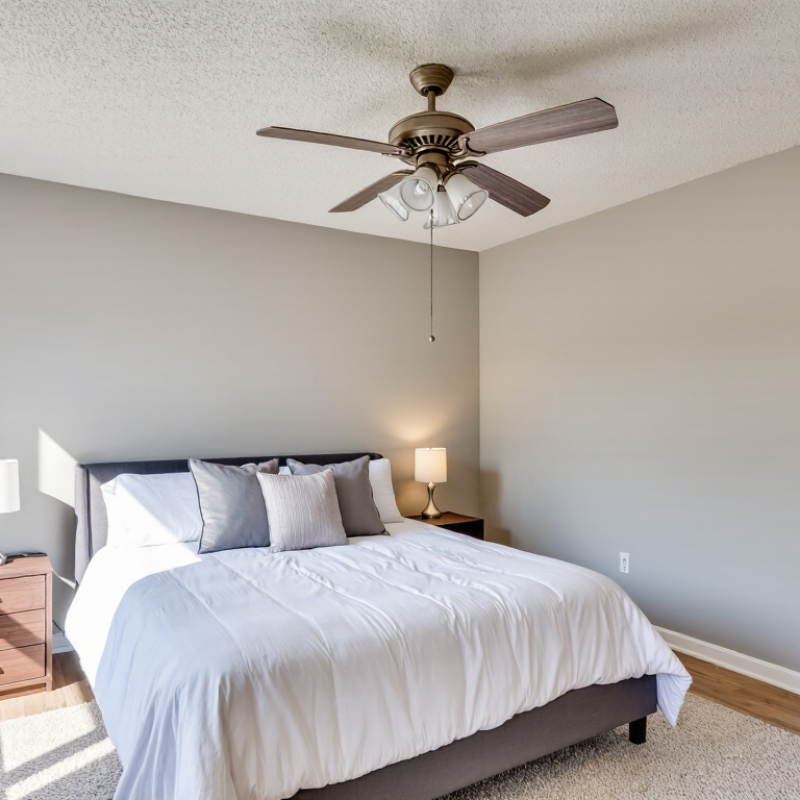
Bedroom Ceiling Fan Safety: UL 507, IEC 60335-2-80, and CPSC Guidelines
A bedroom ceiling fan can be safe when its design, mounting, and use meet recognized safety requirements. UL 507 covers electric fans in the United States, including construction, wiring, insulation, and abnormal-operation testing. IEC 60335-2-80 addresses household and similar electric fans internationally, alongside the general IEC 60335-1 standard. These standards are not installation codes. A compliant fan can still become dangerous when attached to a weak electrical box.
Mounting matters most. The U.S. Consumer Product Safety Commission advises securing overhead fixtures to a fan-rated outlet box, switching off power before installation, and checking for loose parts. Its National Electronic Injury Surveillance System uses roughly 100 hospitals to estimate product-related injuries nationwide. However, CPSC data rarely separates bedroom ceiling-fan incidents from broader fan or household-equipment categories. That limitation deserves attention.
NFPA’s report Home Fires Involving Electrical Distribution and Lighting Equipment found an annual average of about 35,150 home fires, 470 deaths, and 1,100 injuries during 2012–2016. Those figures cover many electrical products, not ceiling fans alone, but they show why wiring deserves respect. During my own safety checks, I would inspect the canopy, downrod, blades, and unusual noise every few months. I would also stop using a visibly wobbling fan. A certification mark helps, but it cannot correct poor installation or ignored wear.
How Ceiling Fans Improve Comfort: The DOE’s 4°F Thermostat-Setting Benefit
2026 Best Ceiling Fans for Bedrooms: Are They Safe?
A ceiling fan can make a bedroom feel cooler without lowering the room’s actual temperature. The U.S. Department of Energy explains that air movement may allow a thermostat setting up to 4°F higher while preserving comfort. That difference can reduce air-conditioning demand during warm nights. However, the 4°F benefit is not guaranteed for everyone. Humidity, airflow direction, room size, and sleep preferences all matter. The fan cools people, not empty rooms.
In practical use, gentle airflow feels pleasant across a cotton sheet. Strong airflow may dry your eyes or disturb sleep. A properly installed fan should have secure mounting, balanced blades, and enough clearance from walls and furniture. Check for wobbling or unusual noise. I once assumed a faster setting was always better, but it often made the room less comfortable. Fans are generally safe in bedrooms when installed correctly, yet loose hardware should never be ignored.
Tips: Set the thermostat 2–4°F higher and test your comfort. Use a low speed for sleeping. Turn the fan off when nobody occupies the room. Confirm the blades rotate counterclockwise during cooling season. Clean dust from the blades regularly. Keep cords and hanging parts away from beds and children. If the fan shakes, stop using it until a qualified professional checks the installation.
Installation Safety Standards: Clearance, Mounting Support, Wiring, and Controls
2026 Best Ceiling Fans for Bedrooms: Are They Safe?
A safe bedroom fan begins with clearance, not appearance. The U.S. Consumer Product Safety Commission advises following manufacturer instructions for installation and operation. Keep the blades well above occupied head height, commonly at least seven feet from the floor, and maintain side clearance from walls, wardrobes, and sloped ceilings. Exact distances vary, so guessing is a poor habit. I have seen attractive installations fail because a door opened into the blade path.
Mounting support matters more than the fan’s weight suggests. Use an outlet box specifically rated for ceiling fans, not a standard light-fixture box. The National Electrical Code, Section 314.27(C), addresses fan-rated outlet boxes and their support requirements. A secure box should connect to structural framing, using approved hardware. Drywall anchors are not enough. UL 507 also covers important safety requirements for electrically operated ceiling fans, including construction and performance testing.
Wiring should be handled with the power isolated at the breaker. A qualified electrician should verify grounding, conductor connections, and compatibility between the fan, wall switch, remote receiver, and dimmer. ESFI, citing national fire data, reports about 51,000 home electrical fires annually, causing nearly 500 deaths and 1,400 injuries. That figure makes rushed wiring difficult to defend. Controls deserve attention too. A loose neutral, unsuitable dimmer, or hidden receiver can cause heat, noise, or intermittent operation. I would not call any installation perfect; periodic checks still matter.
Best Bedroom Fan Features: DC Motors, Sleep Modes, Guards, and Smart Sensors
Bedroom ceiling fans can be safe when their design matches the room and installation. DC motors usually run quietly and use less electricity than many traditional motors. That matters when sleep is light. A reliable sleep mode can reduce speed gradually, preventing sudden noise during the night. Some models also include timers, allowing airflow without running until morning. I have found that gentle, steady air feels more comfortable than maximum speed.
Guards deserve close attention, especially in rooms used by children or pets.
The housing should keep fingers away from moving blades and remain firmly attached to the ceiling. Smart sensors can detect temperature, humidity, or movement. However, sensors are not always perfect. A sensor may react slowly near a closed window or misread a warm blanket. Manual controls should still be available. Installation must follow the manual, with secure ceiling support and correct wiring. A qualified electrician should check uncertain connections.
Tips: Measure the bedroom before buying. Choose a fan with a quiet sleep setting and a visible timer. Test the lowest speed before sleeping. Keep cords and remote controls away from small children. Clean the guard and blades regularly, because dust can increase noise and imbalance. Check for wobbling after installation. If the fan clicks, shakes, or smells hot, switch it off and arrange a professional inspection. Safety is not only a feature; it depends on maintenance and realistic use.
Conclusion
Are ceiling fans safe for bedrooms? Yes, when they are properly certified, correctly installed, and used according to safety instructions. This guide explains how UL 507, IEC 60335-2-80, and CPSC guidance relate to bedroom fan safety, including electrical protection, secure mounting, blade clearance, and reliable controls. A ceiling fan should be attached to a suitable support structure, wired safely, and positioned far enough from walls, furniture, and occupants to prevent contact or injury.
The article also explains how ceiling fans improve comfort by circulating air and potentially allowing a thermostat setting to be raised by about 4°F while maintaining a similar comfort level. For 2026, buyers should compare energy consumption, airflow, noise, and room-size suitability. Helpful features include efficient DC motors, quiet sleep modes, protective guards where appropriate, adjustable speed settings, timers, and smart temperature or occupancy sensors. Selecting the right fan and maintaining it regularly can support comfortable, energy-conscious, and safer bedroom use.
 Fanpro Light
